

VIRGINIA'S PREMIER BANKRUPTCY LAW FIRM • VIRGINIA BEACH • RICHMOND • NEWPORT NEWS • 1-800-662-8813



BANKRUPTCY: AN INTRODUCTION
As an introduction to credit recovery, bankruptcy is a path to financial and credit recovery, which if done properly, can turn paupers into millionaires, save marriages stressed by debt, provide better educational opportunities for your children, and save lives. Yes, financial stress and poor credit can make us poor for life, ruin our marriage, rob our children of a better education and cut should our life. Don’t approach bankruptcy from just the stand point of filing bankruptcy and eliminating debt. Find an attorney that will talk to you about recovering the life you deserve and getting a fresh start. Recovery is the goal. Start the journey to a brighter tomorrow … today.

CHAPTER 7 BANKRUPTCY
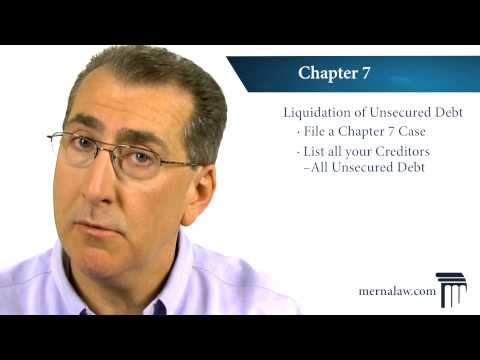
The power of a Chapter 7 bankruptcy is the permanent elimination of unsecured debt. As with the Chapter 13, it also has the powerful ability to immediately stop legal actions such as repossessions, foreclosures, lawsuits, garnishments and liens. Qualified debt will be eliminated forever. There are several categories of debt that are not eliminated by Chapter 7 such as child support obligations, student loans, criminal restitution, and some taxes. To determine the advantages and disadvantages of a Chapter 7 for you schedule a free consultation with one of our attorneys.

CHAPTER 13 BANKRUPTCY
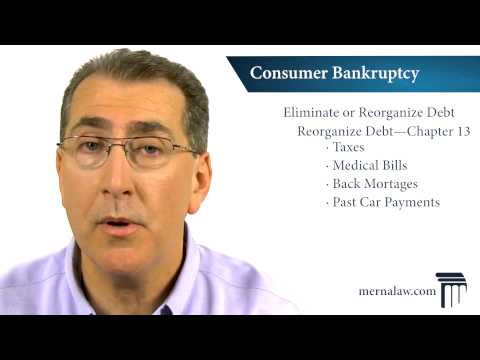
Chapter 13 allows a “wage earner” or working individual to set up a court-supervised plan to repay debt. Most commonly used to halt a foreclosure and repay missed mortgage payments while also restructuring other debt, Chapter 13 is a powerful tool in helping financially distressed individual keep their home and recover from financial setbacks. The Chapter 13 plan also has the ability to extend the time of repayment of debt and is general structured over a three to five year period.

Bankruptcy in Virginia: A Fresh Start, Explained
Bankruptcy is a federal legal process that helps people overwhelmed by debt get a genuine fresh start — either by erasing what they owe or by reorganizing it into a single, manageable plan. It exists for honest people who have fallen behind through job loss, medical bills, divorce, or simply too much high-interest debt. For most Virginians, filing is not the end of anything; it is the first step back to financial stability.
The Merna Law Group has guided thousands of Virginians through this process. Below is a plain-English overview of how consumer bankruptcy works in Virginia, the two main types, what it protects, and how to know whether it is right for you.
The Two Main Types of Consumer Bankruptcy
Chapter 7 — Eliminate Debt
Chapter 7 wipes out most unsecured debt — credit cards, medical bills, personal loans, and payday loans — typically in about 90 days. Virginians who qualify can usually keep their home, car, retirement accounts, and everyday property while permanently discharging debt they cannot afford to repay. Learn more about Chapter 7 bankruptcy.
Chapter 13 — Reorganize and Catch Up
Chapter 13 lets you keep your property and catch up on missed payments through a structured 3-to-5-year plan. It is the right tool when you are behind on a mortgage or car loan and need to stop foreclosure or repossession while keeping the asset. Learn more about Chapter 13 bankruptcy.
Choosing the right chapter depends on your income, your property, and your goals — and the right choice can be the difference between keeping and losing an asset. It is worth reviewing your situation with an experienced attorney before you file.
What Filing Bankruptcy Stops Immediately
The moment your case is filed, a federal court order called the automatic stay takes effect. It legally requires creditors to stop wage garnishments and bank levies, collection calls and letters, lawsuits and judgments, foreclosure sales, and vehicle repossession. For many people, this is the first real relief they have felt in months — the calls stop the same day.
What Property You Can Keep in Virginia
A common fear is that you will lose everything. In reality, Virginia law lets you protect ("exempt") a meaningful amount of property. Current Virginia exemptions include a homestead exemption of up to $5,000 (or $10,000 if you are 65 or older), plus up to $50,000 in your principal residence, plus $500 per dependent, along with protections for household goods, a motor vehicle, and tools of your trade. Veterans with a 40%-or-greater service-connected disability receive an additional $10,000 exemption. Exemptions must be claimed correctly and on time, so the amounts that apply to your case are worth confirming with an attorney. See our full guide to Virginia bankruptcy exemptions.
Do You Qualify? The Means Test
Eligibility for Chapter 7 is determined by the means test, which compares your household income to the Virginia median for your family size. If your income is below the median, you generally qualify. If it is above, a more detailed calculation applies — and even then, many people still qualify or are better served by Chapter 13. Find out how the Virginia means test works.
Who We Help
We represent individuals and families across Virginia — including homeowners facing foreclosure, drivers facing repossession, employees facing garnishment, veterans and military families, and small business owners. Wherever you are in the Commonwealth, you can file your entire case from home by phone and Zoom, from your free consultation through your discharge.
Frequently Asked Questions
Will I lose my house or car if I file bankruptcy?
Usually not. Virginia's exemptions and Chapter 13's catch-up plan are designed to help you keep your home and vehicle when you stay current going forward.
How long does bankruptcy stay on my credit?
A Chapter 7 can appear for up to 10 years and a Chapter 13 for up to 7, but most clients begin rebuilding credit within months of discharge — and unmanageable debt damages credit far longer.
Will people find out I filed?
Bankruptcy is a federal court filing, but it is not announced. In practice, the people in your life do not find out unless you tell them.
How much does it cost to file?
Costs vary by chapter and complexity. We review the full cost with you up front during your free consultation, with no obligation.
Do I have to come to an office?
No. We handle cases entirely by phone and Zoom across Virginia, including the required 341 meeting of creditors.
Ready to talk? Free, confidential consultation — call 1-800-662-8813 or book online. No office visit required.